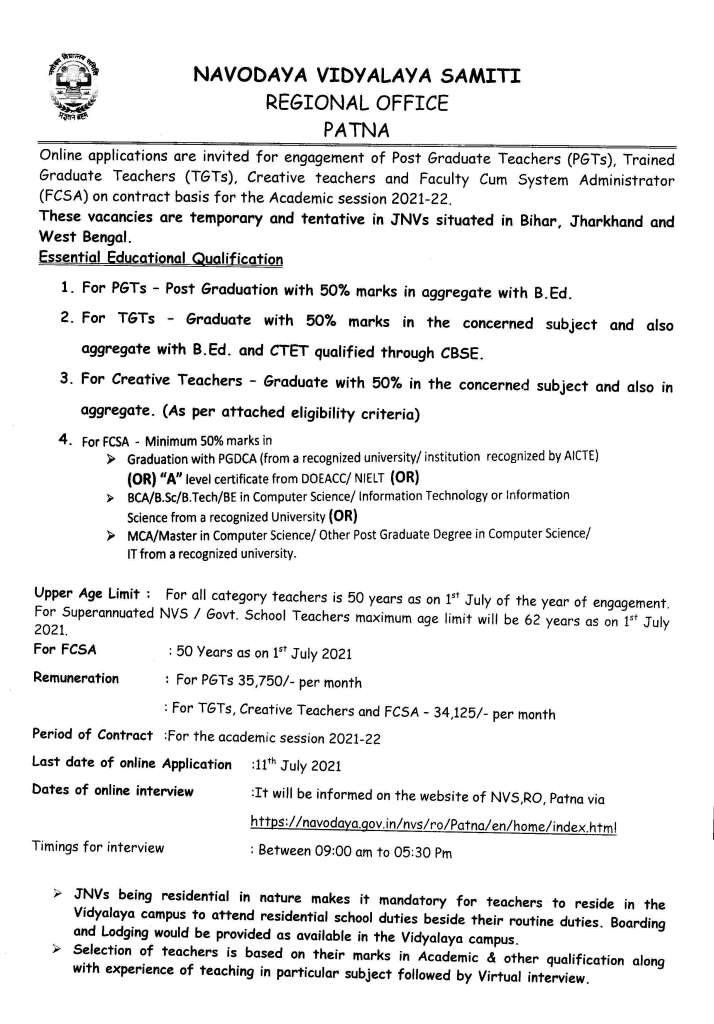
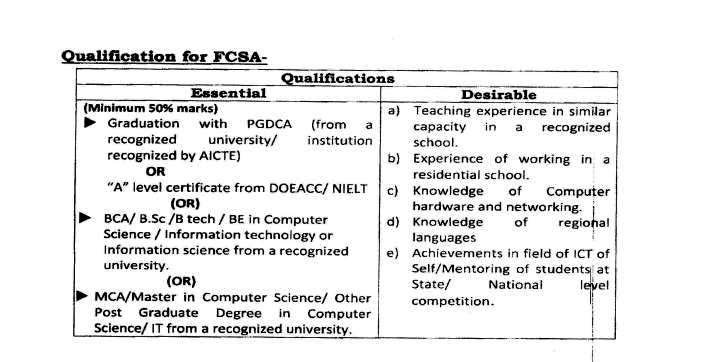
Navodaya Vidyalaya Samiti (NVS), Patna, Bihar has issued a notification for the recruitment of TGT, PGT and Creative Teacher and other posts. Under this, all the candidates who want to apply online for these posts can apply online for NVS Recruitment 2021 on the official website navodaya.gov.in on or before 11 July 2021.
Notification
NVS Patna Recruitment 2021 for TGT, PGT and Other Posts, Apply Online for Navodaya Vidyalaya Teacher @navodaya.gov.in
Last Date of Submission
11-July-21
City
Patna
Organization
Navodaya Vidyalaya Samiti
Functional
Education
Candidates should note that no application form will be accepted after the last date. This recruitment for the academic session 2021- 2022 will be done on a temporary and temporary basis in JNVs located in Bihar, Jharkhand and West Bengal.
Candidates will be selected on the basis of marks in academic and other qualifications as well as teaching experience in the particular subject. Whereas the online interview will be held between 09:00 AM to 05:30 PM.
Indira Gandhi National Open University (IGNOU) has launched a new course. University has started PG course in Urdu program (MA in Urdu program). This program will be called Master of Arts, Urdu. This course has been started by the School of Humanities. interested and eligible candidates for admission in this course can apply online by visiting the official site ignouadmission.samarth.edu.in
IGNOU, (MA) Master of Arts in Urdu – First Year Topic, Syllabus
History of Urdu Language and Literature
Urdu Ghazals
Urdu fiction
Urdu non-fiction
IGNOU, (MA) Master of Arts in Urdu – Second Year Topic, Syllabus
Urdu Nazm
Classical Urdu Poetry
Criticism and Research
Special Study of Mirza Ghalib
IGNOU MA URDU COURSE DURATION
The duration of this program will be two years. It will be taught in Urdu. It will be helpful for the students to develop a good understanding of Urdu literature and other literature like Arabic, Persian, English, Hindi and other new literature.
IGNOU MA URDU COURSE FEES
Candidates should note that the candidates applying for this program will have to pay Rs.12600/-. The candidate has to pay Rs.6300 for the first year.
200 rupees will have to be given for registration. In the second year, Rs 6300 will have to be paid. At the same time, candidates should note that, applicants who want to apply online for this course, they should have a bachelor’s degree or higher degree from a recognized university. At the same time, for more information related to this exam, candidates can visit the official website.
How to apply online for IGNOU MA in Urdu 2021admission
Those students who want to study from IGNOU. To take admission in MA Urdu Program, has to visit the official website of IGNOU at ignouadmission.samarth.edu.in.
On the home page, click on the ‘NEW REGISTRATION’ registration link. A new page will open, register yourself by filling the required details here and click on submit button. The username of the candidate will be sent to the registered e-mail id with the help of which login.
These following documents are required
Scanned passport size photograph (100kb)
Scanned Signature (100kb)
Scanned copy of age proof (200kb)
Scanned copy of relevant education qualification documents (200kb)
Scanned copy of experience certificate (if any) (200 kb)
Scanned copy of caste certificate, if applicable (200 kb)
Scanned copy of BPL certificate for being below poverty line (200 kb)
At present, IGNOU has launched a two year Master of Arts Astrology (MAJY) program. This course will be started by the University’s School of Humanities through open distancing learning mode. The medium of this course will be Hindi and Sanskrit. At the same time, For more details you can mail to directorsoh@ignou.ac.in or call these numbers 011-29572752, 29572753.
Directorate General Border Security Force (BSF) has invited applications for 175 posts including SI, ASI and Constable. Interested and eligible candidates can apply online by visiting bsf.gov.in. The last date of application is 26 July 2021.
Online applications are invited for eligible and interested Male & Female for filling up the under mentioned vacancies in Group ‘B’ & Group ‘C’ combatised (non gazetted) posts in the Border Security Force, Para Medical staff and Veterinary Staff through Online Mode only for vacancy year-2021
Post & Vacancy details of BSF SI, ASI & Constable Recruitment 2021
PARA MEDICAL STAFF
Name of Post
UR
EWS
SC
ST
OBC
Total
SI (Staff Nurse) Non Gazetted (Group-B Post)
14
3
5
2
13
37
ASI (Operation Theatre Technician) (Group-C Post)
–
–
–
–
1
1
ASI (Laboratory Technician) (Group-C Post)
12
3
4
2
7
28
CT (Ward Boy/Ward Girl/ Aya) (Group-C Post)
2
–
–
2
5
9
VETERINARY STAFF
Name of Post
UR
EWS
SC
ST
OBC
Total
HC(Veterinary) (Group-C Post)
9
2
3
2
4
20
Constable (Kennelman (Group-C Post)
Name of Post
UR
EWS
SC
ST
OBC
Total
Constable (Kennelman (Group-C Post)
9
1
1
3
1
15
Assistant Aircraft Mechanic (Assistant Sub Inspector) – 49
Assistant Radio Mechanic (Assistant Sub Inspector) – 8
Constable (Storeman) – 8
SI (Staff Nurse) – 37
ASI (Operation Theater Technician) – 1
ASI (Laboratory Technician) – 28
Whistle (Ward Boy / Ward Girl / Aaya) – 9
Selection process of BSF SI, ASI & Constable Recruitment 2021
There will be a written test first. After this, the second stage will be document verification, physical standard test, physical efficiency test and medical examination.
Application fee BSF SI, ASI & Constable Recruitment 2021
For Group B Posts – Rs.200
For Group C Posts – Rs.100
Fees can be paid through net banking, credit and debit cards.
Education Qualification
PARA MEDICAL STAFF
Name of Post
Education Qualification
SI (Staff Nurse) Non Gazetted (Group-B Post)
(i) 10+2 or Equivalent (ii) Degree/Diploma in General Nursing Programme. iii) Registration as General Nurse and Midwife with Central or State Nursing Council.
ASI (Operation Theatre Technician) (Group-C Post)
i) 10+2 with Science or its equivalent plus Diploma in Operation Technique or Certificate in relevant subject from an Institute recognized by the Central or the State Government.
ASI (Laboratory Technician) (Group-C Post)
i) 10+2 with science or equivalent from a recognized Board or Institution. (ii) Diploma in Medical Laboratory Technology from a recognized Institution of the Central or the State Government.
CT (Ward Boy/Ward Girl/ Aya) (Group-C Post)
i) Pass in Matriculation or equivalent from a recognized University or Board; (ii) (a) Two years work experience in respective trades; Or (b) One year Certificate Course from a recognized Industrial Training Institute or Vocational Institute with at least one year experience in the trade; or (c) Two years Diploma from recognized Industrial Training Institute in the trade or similar trade. (iii) Must qualify trade test. Note: Multi-skilled candidates will be given preference.
AGE RELAXATION
S/No
Category
Age Relaxation permissible beyond the Upperage limit
(i)
Scheduled Caste/ Scheduled Tribe
05 Years
(ii)
Other Backward Classes
03 Years
Ex Servicemen (Unreserved/Gen)
03 Years after deduction of the military service rendered from the actual age as on the closing date.
(iii)
Ex Servicemen (OBC)
06 Years (3 years + 3 years) after deduction of the military service rendered from the actual age as on the closing date.
(iv)
Ex Servicemen (SC/ST)
08 Years (3 years + 5 years) after deduction of the military service rendered from the actual age as on the closing date.
(v)
Central Government Civilian Employees including Departmental Candidates (Unreserved/General) who have rendered not less than 03 years regular and continuous service as on Closing date.
05 Years
(vi)
Central Government Civilian Employees / including Departmental Candidates (OBC) who have rendered not less than 03 years regular and continuous service as on Closing date.
08 (5+3)Years
(vii)
Central Government Civilian Employees / including Departmental Candidates (SC/ST) who have rendered not less than 03 years regular and continuous service as on Closing date.
10 (5+5) Years
PHYSICAL STANDARDS
For the post of SI (Staff Nurse) /ASI (OT Technician)/ASI(Lab Technician)/HC(Veterinary)/CONST (Kennelman)
Shyama Prasad Mukherjee College: Applications are invited for various 19 Non Teaching posts. Under this recruitment drive, 19 non-teaching vacancies will be filled.
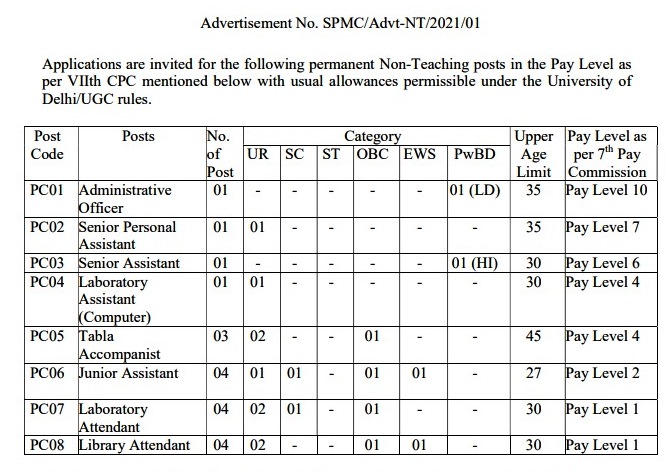
Delhi University’s SPM College (Shyama Prasad Mukherji College) issued the latest Notification (Advertisement No. SPMC/Advt-NT/2021/01) of Non-Teaching recruitment 2021. Non-Teaching posts for Administrative Officer, Senior Personal Assistant, Senior Assistant, Laboratory Assistant, Junior Assistant, Laboratory Attendant, Library Attendant. There are total 19 posts. Those candidates who are eligible and Interested can apply for these posts from 23 June to 16 July 2021.
Candidates can send their application in the prescribed format through Speed Post / Courier / General Post.
Shyama Prasad Mukherji College Road No 57, Punjabi Bagh, New Delhi 110026
Phone No.
011-25224499
Principal Name
Dr. Sadhna Sharma
Important Dates
Start Date for Application Submission
23-Jun-21
Last Date of Application Submission
16-Jul-21
Exam Date
to be announced later by college
Duration of Exam
to be announced later by college
Timing of Exam
to be announced later by college
Admit card relase date
to be announced later by college
Vacancy Details of SPM College Non Teaching Jobs 2021
Administrative Officer – 1
Senior Personal Assistant – 1
Senior Assistant – 1
Laboratory Assistant (Computer)-1
tabla accompanist -3
Junior Assistant-4
Laboratory Attendant-4
library attendant-4
How to apply for SPM College Non Teaching Recruitment 2021
The application form duly filled by the candidate along with self-attested copies of all documents should reach the Principal, Shyama Prasad Mukherjee College (For Women), Punjabi Bagh (West), New Delhi-110026 latest by 16 July.
Application fee for the SPM College Recruitment 2021
The Demand Draft will be drawn in the name of Principal, Shyama Prasad Mukherjee College (For Women), Punjabi Bagh (West), New Delhi-110026 Delhi.
General / Unreserved category candidates – Rs 700
OBC (NCL) / EWS candidates- Rs.500
General Female Candidates – Rs.500
SC/ST/PWD candidates – Rs 400
Selection Process for the Non Teaching Posts of SPM College 2021
Candidates are required to clear Written Test and Skill Test for selection
Educational Qualification for Various SPM College Non Teaching Recruitment 2021
Administrative Officer
Name of the Post: Administrative Officer
Number. of Post: 01 (LD)
Classification: Group A
Scale of Pay: Pay Level 10 as per VII CPC
Age Limit: 35 Years for Direct Recruitment
Educational Qualification: · Good academic record with Master’s degree with at least 55% of marks or its equivalent grade of B in the UGC seven-point scale.
Desirable: 1. At least 03 years of experience in supervisory or equivalent cadre in a Group B post in a government department/university / educational or Research Institution / Teaching and/or Research experience along with proven administrative capabilities. 2. L.L.B or MBA or CA / ICWA or MCA or M.Phil / Ph.d. qualification
Senior Personal Assistant
Name of the Post: Senior Personal Assistant
Number of Post: 01 (UR)
Classification: Group B, Ministerial
Scale of Pay: Pay Level 7 as per VII CPC
Age Limit: 35 Years for Direct Recruitment
Educational Qualification: · A Bachelor Degree from a recognized University · At least 03 years of experience working as Private Secretary / Personal Assistant / Stenographer / Executive Assistant / Executive Secretary in a Government Department / Universities / Autonomous Bodies / PSUs / Educational Institution recognized by the Government.
Senior Assistant
Name of the Post: Senior Assistant
Number of Post: 01 (HI)
Classification: Group B, Ministerial
Scale of Pay: Pay Level 6 as per VII CPC
Age Limit: 30 Years for Direct Recruitment
Educational Qualification: · Graduate or Post-graduate from a recognized University in any discipline with working knowledge of computers.
Laboratory Assistant (Computer)
Name of the Post: Laboratory Assistant (Computer)
Number of Post: 01 (UR)
Classification: Group C, Non-Ministerial
Scale of Pay: Pay Level 4 as per VII CPC
Age Limit: 30 Years for Direct Recruitment
Essential Qualifications:- 1. Should have passed Senior Secondary (10+2) or an equivalent examination with relevant Science Subject OR Graduate with relevant subject
Tabla Accompanist
Name of the Post: Tabla Accompanist
Number of Post: 03 (UR-2, OBC-1)
Classification: Group C, Non-Ministerial , Ex-cadre
Scale of Pay: Pay Level 4 as per VII CPC
Age Limit : 45 Years for Direct Recruitment
Essential Qualifications : 1. Proficiency in the art of Tabla / Pakhawaj playing with particular reference to the accompaniment aspects for Vocal (both classical and semi classical) as well as Instrumental music.
2. Degree in Tabla / Pakhawaj OR Diploma / 10+2 examination of any Indian Board and should have undergone training in Tabla / Pakhawaj under an established Guru, for a period of not less than 6 years.
Junior Assistant
Name of the Post : Junior Assistant
No. of Post : 04 (UR-1, SC-1, OBC-1, EWS-1)
Classification : Group C, Ministerial
Scale of Pay : Pay Level 2 as per VII CPC
Age Limit : 27 Years for Direct Recruitment
Essential Qualifications:-
1. A Senior Secondary School Certificate (10+2) or its equivalent qualification from a recognized Board / University / Institution.
2. Having a typing speed of 35 w.p.m. in English or 30 w.p.m. in Hindi Typewriting through Computers.
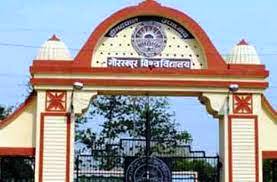
Deendayal Upadhyaya Gorakhpur University has clarified the format of conducting undergraduate and postgraduate examinations of session 2020-21. The examinations for both graduation and post graduation will be of one and a half hours. The questions in the undergraduate examination will be multiple choice, whereas the students of postgraduate examination will have to answer 70 percent multiple choice questions and 30 percent descriptive questions.
DDU Gorakhpur Exams 2021 will start from July 27
The examinations will start from July 27 as per the pre-announced schedule. Earlier this date was fixed as July 29. In the meeting of the examination committee held, the members of the committee also approved this decision of the university. During the meeting, according to the guidelines received in the online meeting of all the Vice Chancellors and senior officers of the state with the Deputy Chief Minister on June 24, partial changes were made in the time-table and examination format.
After the meeting Vice Chancellor Prof. Rajesh Singh constituted a six-member committee and entrusted them with the responsibility of ensuring compliance with the guidelines received from the government.
Assignment instead of practical in DDU Gorakhpur exam 2021
Controller of Examinations Dr. Amarendra Kumar Singh said that in practicals, great relief has been given to the students. They just have to complete the assignment. He said that the examination schedule has also been prepared. It will be released soon. The schedule of semester examinations is being prepared. Preparations are being made to organize them between August 10-15.
First year students will be promoted in DDU Exam 2021
The annual and semester examinations will be of 2nd and 3rd year only. It has been decided to promote the first year students of undergraduate and postgraduate. The graduation second and third year examinations will be conducted in offline mode.
Official Website of Deendayal Upadhyaya Gorakhpur University= Click Here
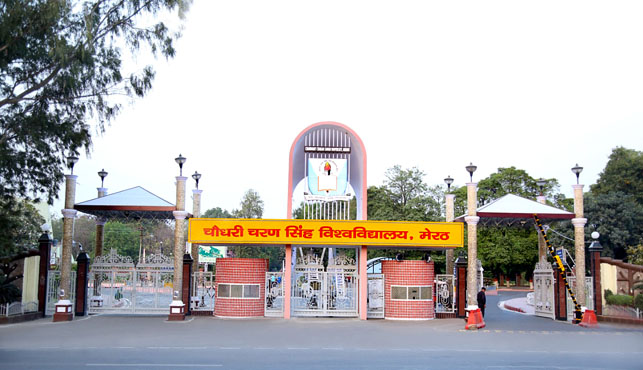
UG Regular-Private Final Year and UG-PG Final Semester Examinations in Chaudhary Charan Singh University will be held in four shifts from July 8 to August 8. final year papers will be held from July 20. The university will not conduct even semester examinations. On the basis of odd semester numbers, students will be promoted to the next semester by giving marks to the students in even semesters.
According to Registrar Dhirendra Kumar, soon the revised exam schedule will be uploaded on the website.
CCSU B.Ed final Exam 20 to 29 July 201
There will be no B.Ed first year papers in the university. Ed final year will be held from July 20 to 29. Paper 27 of Main B.Ed and Special B.Ed will run till July 29.
The decision on the date and format of the LLB I, VII, LLM I and IV and 10 semester examinations of BA-LLB in the university will be done later.
In such a situation, the university will issue separate instructions for the law course examinations. The university will decide on these in the examination committee going to be held soon.
Papers will not be again in CCSU
According to the university, the examinations of 001, 002, 003 subject code, which were held on April 10, will not be repeated. Paper code A-B-226, B-256, B-213, B-220, B-241, A-201, I-301 New and Graduation in second year paper code A-B-226, B-256, B-213, I-301 new and graduation done on 12th April itself Students in B 326, B-356, B-313, B-320, B-341 and S-301 will have the freedom not to appear for the remaining papers in the respective paper.
Students will be given marks in the second code on the basis of the April 12 paper itself. But if students want they can join the remaining paper code. In this situation, marks will not be given on the basis of April 12 examination, but on the basis of the remaining paper code, marks will be given in all the papers of the said paper.
Know qualifying-foundation number
According to the university, the written examination in paper code A-001, A-002, A-003 physical education has been done on April 10. The marks obtained in these papers will be considered as marks of practical of physical education. There will be no practical.
According to the university, since the first year examinations are not being held, there will be no foundation course A-009 examination. In the first year qualifying course A-008, only those students will be able to appear in these papers, who have either back in these papers or are qualified due to some other reason. The students of the same year of the first year will not be able to appear in the examinations of these papers.
CCSU foundation papers in the second year
According to the university, there will be examinations of 011, 012, 013 (Language) and qualifying course A-10 General Awareness in the second year foundation course. All the qualified students of second year, back and X will be able to appear in the examinations of these papers.
CCSU Odd Sem Exam 2021 will be like this
Final year and final semester papers from July 8 to August 8. Those students in the first year of graduation who were promoted to the second year of graduation without examination in the examination of 2019-20, Their second year papers will also be held from July 8 to August 8.
All courses will have only final semester examinations. Even semester will not be conducted. Students will be given numbers in even semesters on the basis of odd semesters. Odd semester papers have been done in December.
Odd semesters except law, which did not have all the examinations in December or some subjects were left, their papers will also be held between July 8 and August 8.
In the undergraduate course BA, B.Com, B.Sc. 2nd and final year, students will have the option to take only one paper code test in each subject. Students should prepare one paper code in each subject as per their convenience.
In the four-year BPT, in the second year 2019-20 and 2020-21, students directly admitted (lateral entry) will be promoted by giving marks on the basis of diploma.
In the examination hall, the student will be given a question paper of one subject question paper group, based on his/her desire. Numbers will be given in the rest of the code based on the paper that the student will give.
All the papers will be of one and a half hours. In the annual system, the final year papers will be objective and the remaining years will be subjective.
There will be no practical in the annual examinations of the even semester June-2021 and session 2020-21. Practical marks will be given on the basis of written test.
Viva in regular examinations will be in online mode only, whereas in private courses there will be no viva. In these, Viva marks will be given on the basis of written examination.
For admission to the undergraduate class in Chaudhary Charan Singh University and affiliated colleges, registration will start from July. This time the rules of admission in the university will also change.
Under the new education policy in universities and colleges, a new syllabus is also being implemented in graduation. Regarding which the rules for admission in the university are being prepared.
Under the new education policy, students have been given freedom to choose the subject. Keeping this in view, a combination of different subjects is being prepared in the university.
Admission portal of CCSU will open in July
Registration for admission to undergraduate classes can be started from July 25. The eyes of the university are currently on the results of UP Board, CBSE and ICSE Board. Admission to the undergraduate classes in the university will be done on the basis of merit. On the other hand, online applications are being made for campus entrance.
The last date of application has been fixed as July 10. Admissions will be taken through entrance examination in courses like LLM, M.Ed., B.P.Ed, M.P.Ed.
Chaudhary Charan Singh University will have to answer half the questions within one and a half hours in the main examination from July 2, semester from July 8 and BEd final year from September 1. The university has also halved the number of questions, halving the time of three hours. However, the numbers have almost doubled.
CCS University Exam Pattern 2021
The paper of B.Ed final will be of two hours. The report of the Dean’s Committee was given its green signal in the Academic Council meeting held under the chairmanship of Prof. NK Taneja on Wednesday. The committee has also given question wise marks arrangement in each paper. The proposed examinations will now follow the same pattern.
Know CCSU Exam Pattern 2021, the questions and numbers in the subject wise paper
In the objective type exam, students will have to answer 75 questions out of 100. Marks of all 75 questions will be same.
The question papers in which the pattern is of three sections i.e. very short, short and detailed answer, in which any two out of five questions in very short, any one in three questions of short answer and any two out of five questions of detailed answer will have to be answered.
In examinations in which the pattern of question papers is to answer any five detailed answer questions out of ten, students will now have to answer two out of ten questions.
Main Annual Examination 2021 Any five out of ten questions to be answered in the short answer question in section A of the question paper containing the unified syllabus of the second year. One question will have to be answered in Section B, C of broad answer and one question in Section D and E of detailed answer.
There will be a short answer question of five marks and a detailed answer question of 15 marks.
Ed final paper will be of two hours instead of three. Section A will consist of any two out of three broad answer questions, any two out of four questions in section B, and any eight out of ten questions in the very short section section C. Each detailed question will be of 12 marks, short answer four and very short one mark.
In M.Ed course, the question paper pattern will consist of any two out of five very short questions from section A, any one out of three questions in section B short answer and any two out of five questions in section C with detailed answers. Each very short question will carry eight, short 16 and detailed 24 marks.
In BA-BEd, BL.Ed course, the question paper consisting of three sections will have to answer any two out of six broad answer questions, any one in short answer three and all five questions in very short. Detailed question 15, short 10 and very short will be of two marks each.
In MPED course, any two out of the first four questions while question number five will be compulsory. In this course only three questions will have to be answered. The first two will be 30-30 and question number five will be of ten marks.
In the B.Com Honors in the campus, any five out of ten questions of very short, two questions out of five questions of detailed answer will have to be solved. Very short four-four and detailed questions will be of 25 marks.
– All ten questions from MBA, MBA-HA, Very Short in Campus MBA, MBA-HA, BBA-HA, one from Section B and only two questions from Section B have to be answered. Very short two marks each while section B 20 and C will be of 15 marks each.
-Annual Examination In the second year foundation course Hindi and English A, B, C, S-11, S-012 will have to answer any four out of seven questions. Questions one and two will be compulsory. In question 3, 4, 5, 6, 7 any two have to be attempted.
In the second year foundation course Sanskrit A, B, C, S-13, all questions will be compulsory. Answer of any one mantra in question one, any one verse in question two, any two synonyms in question three, any five parts out of ten in question five have to be answered.
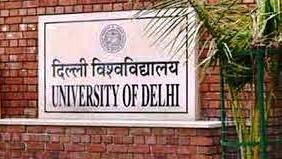
Delhi University has released the Revised Academic Calendar 2021. In this, details about the new academic session and the exam of first year students are given. According to this calendar, the first year students’ session will start from August 31. The examinations will be held from August 12 to August 24. The semester break will be for 6 days only.
DU revised Academic calendar 2021
FIRST BATCH/FIRST SEMESTER
Commencement of Classes
18-11-2020 (Wednesday)
Preparatory Break and Practical Examinations
06-03-2021 (Saturday) to 14-3-2021 (Sunday)
Conduct of Examinations
15-03-2021 (Monday) to 27-03-2021 (Saturday)
Semester Break
28-03-2021 (Sunday) to 31-03-2021 (Wednesday)
EVEN SEMESTER (FIRST YEAR)
Commencement of Classes
01-04-2021 (Thursday)
Suspension of online teaching in view of sudden surge in COVID-19 cases
04-05-2021 (Tuesday) to 16-05-2021 (Sunday)
Preparatory Break and Practical Examinations
03-08-2021 (Tuesday) to 11-08-2021 (Wednesday)
Conduct of Examinations
12-08-2021 (Thursday) to 24-08-2021 (Tuesday)
Semester Break
25-08-2021 (Wednesday) to 30-08-2021 (Monday)
Commencement of Next Academic Session for this batch
3 1-08-2021 (Tuesday)
Classes of First Year (DU First Year) were started from 01 April 2021. Classes were suspended from May 04 to May 16 due to the second wave of Kovid-19. The class has started again. Preparatory break and practical exams for exam preparation will be conducted from 03 August 2021 to 11 August 2021. After this DU First Year Exam 2021 will be conducted from 12 August 2021 to 24 August 2021.
Generation of Computer in Hindi | कम्प्यूटर की पीढ़ीयाँ
आज के समय में कंप्यूटर हमारे जीवन का एक अभिन्न अंग है। उनका उपयोग हवाई जहाज और रेलवे के लिए टिकटों के आरक्षण, टेलीफोन और बिजली के बिलों के भुगतान, बैंकों से पैसे की निकासी, व्यापार में, मौसम की स्थिति का पूर्वानुमान, स्वास्थ्य क्षेत्र, इंटरनेट पर जानकारी की खोज आदि के लिए किया जाता है।
पर कंप्यूटर के शुरुआती दौर में ये सब कम कंप्यूटर नही कर पाते थे| शुरुआती समय में कंप्यूटर बहुत भारी और बड़े बड़े होते थे. धीरे धीरे समय के साथ कंप्यूटर में बहुत बदलाव आये है. इन बदलावों में कंप्यूटर की नई पीडिया का जन्म हुआ.
कंप्यूटर की हर पीढ़ी के साथ साथ कंप्यूटर का आकार छोटा और कार्यकुशलता अच्छी होती गई
कैलकुलेटिंग मशीन ABACUS बड़ी संख्या की गणना के लिए पहला यांत्रिक गणना उपकरण था।
ABACUS
ABACUS शब्द का अर्थ है गणना बोर्ड। इसमें क्षैतिज स्थिति में बार होते हैं जिन पर मोतियों के सेट डाले जाते हैं। क्षैतिज पट्टियों में प्रत्येक में 10 मनके होते हैं, जो इकाइयों, दहाई, सैकड़ों आदि का प्रतिनिधित्व करते हैं। नेपियर की हड्डियों में दिखाया गया एक अबेकस एक यांत्रिक उपकरण था जिसे 1617 में गुणा करने के उद्देश्य से बनाया गया था .. एक अंग्रेजी गणितज्ञ जॉन नेपियर द्वारा। 0 स्लाइड रूल 16वीं शताब्दी में एक अंग्रेजी गणितज्ञ एडमंड गुंटर द्वारा विकसित किया गया था।
स्लाइड नियम का उपयोग करके, कोई जोड़, घटाव, गुणा और भाग जैसे संचालन कर सकता है। 1970 के दशक के अंत तक इसका व्यापक रूप से उपयोग किया जाता था।
पास्कल की ऐडिंग एंड सबट्रेक्शन मशीन को Blaise Pascal द्वारा विकसित किया गया था। यह जोड़ और घटा सकता है। मशीन में पहिए, गियर और सिलेंडर शामिल थे। लाइबनिज़ की गुणन और विभाजन मशीन एक यांत्रिक उपकरण था जो गुणा और भाग दोनों कर सकता था। जर्मन दार्शनिक और गणितज्ञ गॉटफ्रीड लाइबनिज ने इसे 1673 के आसपास बनवाया था।
कंप्यूटर की प्रत्येक पीढ़ी को एक नए सेकंड और तार्किक विकास के आधार पर डिज़ाइन किया गया है, जिसके परिणामस्वरूप बेहतर, सस्ते और छोटे कंप्यूटर होते हैं जो अधिक, शक्तिशाली, तेजी से उनके डेसर्स को प्रभावित करते हैं। कंप्यूटर की पांच पीढ़ियां हैं।
Generation of Computer in Hindi | कम्प्यूटर की पीढ़ीयाँ कौन कौन सी है | कंप्यूटर की पीढ़िया इन हिंदी | जनरेशन ऑफ़ कंप्यूटर इन हिंदी
पहली पीढ़ी के कंप्यूटर (1940-1956)
दूसरी पीढ़ी के कंप्यूटर (1956-1964)
तीसरी पीढ़ी के कंप्यूटर (1964-1971)
चौथी पीढ़ी के कंप्यूटर (1971-अभी तक)
पचमी पीढ़ी के कंप्यूटर (अभी से अगली तक)
निम्नलिखित उपखंडों में, हम कंप्यूटर की पीढ़ी के बारे में चर्चा करेंगे-
उनके द्वारा इस्तेमाल की जाने वाली तकनीक (हार्डवेयर और सॉफ्टवेयर),
कंप्यूटिंग विशेषताओं (गति, यानी प्रति सेकंड निष्पादित निर्देशों की संख्या) ,
पहली पीढ़ी के कंप्यूटर | First Generation of Computer in Hindi | फर्स्ट जनरेशन ऑफ़ कंप्यूटर
पहली पीढ़ी, First Generation (1940-1956): वैक्यूम ट्यूब (Vaccum Tube) हार्डवेयर प्रौद्योगिकी का उपयोग करना पहली पीढ़ी के कंप्यूटरों में सर्किटरी के लिए वैक्यूम ट्यूब और मेमोरी के लिए चुंबकीय ड्रम का उपयोग किया गया था। कंप्यूटर में वें इनपुट पंच कार्ड और पेपर टेप के माध्यम से था। आउटपुट को प्रिंटआउट के रूप में प्रदर्शित किया गया था।
Vacuum Tube
पहले पीढ़ी के कंप्यूटर का नाम ENIAC (Electronic Numerical Integrator and Computer) था. ENIAC (Electronic Numerical Integrator and Computer) का आविष्कार जे. पी. एकर्ट (J.P. Eckert) और जे. डब्लू. मोश्ले (J.W. Mauchly) ने मिलके करा था.
पहली पीढ़ी के कंप्यूटर में सॉफ्टवेर टेक्नोलॉजी | Software Technology in first Generation Computer
पहली पीढ़ी के कंप्यूटर में निर्देश मशीनी भाषा (Machine Language) में लिखे गए थे। निर्देशों की कोडिंग के लिए मशीनी भाषा 0 और 1 का उपयोग करती है।
पहली पीढ़ी के कंप्यूटर के नाम | (Name of the First Generation of Computer)
पहली पीढ़ी के कंप्यूटर के निम्नलिखित लक्षण | Characteristics of first Generation Computer
पहली पीढ़ी के कंप्यूटरों में बड़ी संख्या में वैक्यूम ट्यूब का उपयोग किया जाता था
ये कंप्यूटर बड़े कमरों में रखे जाते थे. और इस प्रकार बहुत अधिक गर्मी उत्पन्न होती थी।
वे बहुत अधिक बिजली की खपत करते थे
उन्हें संचालित करना महंगा था।
मशीनों में बार-बार खराबी आने की संभावना थी और उन्हें निरंतर रखरखाव की आवश्यकता थी।
पहली पीढ़ी के कंप्यूटर एक समय में एक समस्या का समाधान कर सकते थे।
यह कंप्यूटर वैज्ञानिक अनुप्रयोगों के लिए उपयोग किए जाते थे क्योंकि वे अपने समय के सबसे तेज कंप्यूटिंग डिवाइस थे।
दूसरी पीढ़ी के कंप्यूटर | Second Generation of Computer in Hindi
कंप्यूटर की दूसरी पीढ़ी, सेकंड जनरेशन ऑफ़ कंप्यूटर(1956-1964):ट्रांजिस्टर का उपयोग हार्डवेयर प्रौद्योगिकी ट्रांजिस्टर ने कंप्यूटर की पहली पीढ़ी के वैक्यूम ट्यूबों को बदल दिया। ट्रांजिस्टर ने कंप्यूटर को छोटा, तेज, सस्ता, ऊर्जा कुशल और विश्वसनीय बनने दिया। दूसरी पीढ़ी के कंप्यूटरों ने प्राथमिक मेमोरी के लिए चुंबकीय कोर तकनीक का इस्तेमाल किया। उन्होंने सेकेंडरी स्टोरेज के लिए मैग्नेटिक टेप और मैग्नेटिक डिस्क का इस्तेमाल किया।
Transistors
इनपुट अभी भी छिद्रित कार्डों के माध्यम से था और आउटपुट प्रिंटआउट का उपयोग कर रहा था। उन्होंने एक संग्रहीत प्रोग्राम की अवधारणा का उपयोग किया, जहां कंप्यूटर की मेमोरी में निर्देश संग्रहीत किए जाते थे। सॉफ्टवेयर प्रौद्योगिकी निर्देश असेंबली भाषा का उपयोग करके लिखे गए थे। असेंबली भाषा निर्देशों की कोडिंग के लिए जोड़ने के लिए जोड़ें और घटाव के लिए उप जैसे निमोनिक्स का उपयोग करती है।
दूसरी पीढ़ी के कंप्यूटर में सॉफ्टवेर टेक्नोलॉजी | Software Technology in Second Genration Computer
निर्देश को मशीनी भाषा में लिखने की तुलना में असेम्बली भाषा में लिखना आसान होता है। इस अवधि के दौरान उच्च स्तरीय प्रोग्रामिंग भाषाएं, जैसे कोबोल और फोरट्रान के शुरुआती संस्करण भी विकसित किए गए थे। कंप्यूटिंग विशेषताएँ गणना का समय माइक्रोसेकंड में था।
दूसरी पीढ़ी के कंप्यूटर के नाम | Name of the Second Generation of Computer
पीडीपी -8 (PDP-8)
आईबीएम 1401 (IBM 1401)
सीडीसी 1604 (CDC 1604)
दूसरी पीढ़ी के कंप्यूटर के निम्नलिखित लक्षण | Characteristics of Second Gerantion Computer
भौतिक उपस्थिति ट्रांजिस्टर वैक्यूम ट्यूब की तुलना में आकार में छोटे होते हैं, इस प्रकार, कंप्यूटर का आकार भी कम हो गया था।
अनुप्रयोग इन कंप्यूटरों के व्यावसायिक उत्पादन की लागत बहुत अधिक थी
दूसरी पीढ़ी के कंप्यूटरों में ट्रांजिस्टर को मैन्युअल रूप से इकट्ठा किया जाना था।
दूसरी पीढ़ी के कंप्यूटरों ने कम गर्मी उत्पन्न की
उन्हें पहली पीढ़ी के कंप्यूटरों की तुलना में कम रखरखाव की आवश्यकता होती है।
तीसरी पीढ़ी के कंप्यूटर | Third Generation of Computer in Hindi
तीसरी पीढ़ी, थर्ड जनरेशन ऑफ़ कंप्यूटर (1964 से 1971): इंटीग्रेटेड सर्किट का उपयोग, (Integrated Circuit) हार्डवेयर टेक्नोलॉजी तीसरी पीढ़ी के कंप्यूटरों ने इंटीग्रेटेड सर्किट (IC) एक सिलिकॉन चिप पर कई ट्रांजिस्टर रखे जाते हैं। सिलिकॉन एक प्रकार का सेमीकंडक्टर है। IC चिप के उपयोग से कंप्यूटर की गति और दक्षता में कई गुना वृद्धि हुई।
कंप्यूटिंग विशेषताएँ गणना का समय नैनोसेकंड में था। दूसरी पीढ़ी के कंप्यूटरों की तुलना में इन कंप्यूटरों का आकार काफी छोटा था।
IC Chips
पंच कार्ड और प्रिंटआउट के बजाय तीसरी पीढ़ी के कंप्यूटर के साथ बातचीत करने के लिए कीबोर्ड और मॉनिटर का उपयोग किया गया था।
तीसरी पीढ़ी के कंप्यूटर में सॉफ्टवेयर टेक्नोलॉजी | Software Techonolgy in Third Generation Computer
कीबोर्ड और मॉनिटर ऑपरेटिंग सिस्टम के माध्यम से परस्पर जुड़े हुए थे। ऑपरेटिंग सिस्टम ने एक ही समय में विभिन्न अनुप्रयोगों को चलाने की अनुमति दी। प्रोग्रामिंग के लिए मशीनी भाषा और असेंबली भाषा के बजाय हाई लेवल लैंग्वेज का व्यापक रूप से उपयोग किया गया था।
कंप्यूटर जन दर्शकों के लिए सुलभ हो गए। कंप्यूटरों का उत्पादन होमयूजर के लिए भी किया जाने लगा था, और वे अपने पूर्ववर्तियों की तुलना में छोटे और सस्ते थे।
तीसरी पीढ़ी के कंप्यूटर के गुण (Advantage of third generation of Computer in Hindi )
तीसरी पीढ़ी के कंप्यूटरों ने कम बिजली का इस्तेमाल किया
और दूसरी पीढ़ी के कंप्यूटर की तुलना में कम गर्मी उत्पन्न की
कंप्यूटर की लागत में काफी कमी आई क्योंकि कंप्यूटर के अलग-अलग घटकों को मैन्युअल रूप से इकट्ठा करने की आवश्यकता नहीं थी।
कंप्यूटर की रखरखाव लागत भी अपने पूर्ववर्तियों की तुलना में कम थी।
तीसरी पीढ़ी के कंप्यूटर के नाम (Name of the third Generation of Computer)
आईबीएम 370 (IBM 370)
पीडीपी 11 (PDP 11)
चौथी पीढ़ी के कंप्यूटर| Fourth Generation of Computer in Hindi
Microprocessors
चौथी पीढ़ी, फोर्थ जनरेशन ऑफ़ कंप्यूटर (1971-Present): माइक्रोप्रोसेसरों का उपयोग, (Microprocessor) हार्डवेयर प्रौद्योगिकी वे बड़े पैमाने पर एकीकरण (एलएसआई) और बहुत बड़े पैमाने पर एकीकरण का उपयोग करते हैं। (वीएलएसआई) तकनीक। एलएसआई से नॉलोजी का उपयोग करते हुए हजारों ट्रांजिस्टर एक छोटी सिलिकॉन चिप पर एकीकृत होते हैं। वीएलएसआई एक छोटी सी चिप में सैकड़ों हजारों घटकों को एकीकृत करने की अनुमति देता है।
माइक्रोप्रोसेसर (microprocessor) एक चिप है जिसमें लाखों ट्रांजिस्टर और घटक होते हैं, और, जिसे एलएसआई और वीएलएसआई तकनीक का उपयोग करके डिज़ाइन किया गया है। कंप्यूटर की इस पीढ़ी ने पर्सनल कंप्यूटर (पीसी) को जन्म दिया। सेमीकंडक्टर मेमोरी’ ने पहले की चुंबकीय कोर मेमोरी को बदल दिया, जिसके परिणामस्वरूप मेमोरी में तेजी से रैन-डोम पहुंच प्राप्त हुई। सेकेंडरी स्टोरेज डिवाइस जैसे मैग्नेटिक डिस्क भौतिक आकार में छोटे और क्षमता में बड़े हो गए।
कंप्यूटर को जोड़ना इस युग का एक और महत्वपूर्ण विकास है। कंप्यूटरों को नेटवर्क बनाने से जोड़ा गया जिससे इंटरनेट का उदय हुआ। इस पीढ़ी ने माउस और हैंडहेल्ड डिवाइस जैसे पॉइंटिंग डिवाइस का विकास भी देखा।
चोथी पीढ़ी के कंप्यूटर में सॉफ्टवेयर टेक्नोलॉजी | Software Technology in Fourth Generation Computer
सॉफ्टवेयर प्रौद्योगिकी इस समय के दौरान एमएस-डॉस और एमएस-विंडोज जैसे कई नए ऑपरेटिंग सिस्टम विकसित हुए। कंप्यूटर की इस पीढ़ी ने ग्राफिकल यूजर इंटरफेस (जीयूआई) का समर्थन किया। जीयूआई एक उपयोगकर्ता के अनुकूल इंटरफेस है जो उपयोगकर्ता को मेनू और आइकन के माध्यम से कंप्यूटर के साथ बातचीत करने की अनुमति देता है। कार्यक्रमों को लिखने के लिए उच्च स्तरीय प्रोग्रामिंग भाषाओं का उपयोग किया जाता है।
चोथी पीढ़ी के कंप्यूटर के गुण (Advantage of fourth Generation of Computer in Hindi )
भौतिक रूप वे पिछली पीढ़ी के कंप्यूटरों से छोटे होते हैं। कुछ हाथ की हथेली में भी फिट हो सकते हैं।
एमएस-डॉस और एमएस-विंडोज जैसे कई नए ऑपरेटिंग सिस्टम विकसित हुए।
वे व्यावसायिक उद्देश्यों के लिए व्यापक रूप से उपलब्ध हो गए।
व्यक्तिगत कंप्यूटर घरेलू उपयोगकर्ता के लिए उपलब्ध हो गए।
कंप्यूटिंग विशेषताएँ गणना समय पिकोसेकंड में है।
GUI और पॉइंटिंग डिवाइस कंप्यूटर पर आसान उपयोग और सीखने की सुविधा प्रदान करते हैं।
नेटवर्किंग के परिणामस्वरूप विभिन्न कंप्यूटरों के बीच संसाधन साझाकरण और संचार हुआ है।
4004 चिप पहला माइक्रोप्रोसेसर था। कंप्यूटर के घटक, जैसे सेंट्रल प्रोसेसिंग यूनिट (सीपीयू) और मेमोरी एक ही चिप पर स्थित थे।
चोथी पीढ़ी के कंप्यूटर के नाम (Name of the fourth Generation of Computer)
1981 में, IBM ने घरेलू उपयोग के लिए पहला कंप्यूटर पेश किया।
1984 में, Apple ने Macintosh की शुरुआत की।
पांचवीं पीढ़ी के कंप्यूटर| Fifth Generation of Computer in Hindi
पांचवीं पीढ़ी, फिफ्थ जनरेशन ऑफ़ कंप्यूटर (वर्तमान और अगली): आर्टिफिशियल इंटेलिजेंस (Artificial Intelligence) का उपयोग करना पांचवीं पीढ़ी की कंप्यूटिंग का लक्ष्य ऐसे कंप्यूटर विकसित करना है जो सीखने और आत्म-संगठन में सक्षम हों। पांचवीं पीढ़ी के कंप्यूटर सुपर लार्ज स्केल इंटीग्रेटेड (एसएलएसआई) चिप्स का उपयोग करते हैं जो एक ही चिप पर लाखों घटकों को स्टोर करने में सक्षम होते हैं। इन कंप्यूटरों में बड़ी मेमोरी आवश्यकताएं होती हैं।
पांचवीं पीढ़ी के कंप्यूटर आर्टिफिशियल इंटेलिजेंस (Al) पर आधारित हैं। वे सोचने और तर्क करने के मानवीय तरीके का अनुकरण करने का प्रयास करते हैं। आर्टिफिशियल इंटेलिजेंस में एक्सपर्ट सिस्टम (ES), नेचुरल लैन-गेज प्रोसीइंग (NLP), स्पीच रिकग्निशन, वॉयस रिकग्निशन, रोबोटिक्स आदि जैसे क्षेत्र शामिल हैं।
पांचवीं पीढ़ी के कंप्यूटर के गुण (Advantage of fifth generation of Computer in Hindi)
इंटरनेट (Internet) – यह कंप्यूटर इंटरनेट का प्रयोग करके दुनिया भर के कंप्यूटर से जुड़े होते है. जिसके कारण हम घर या ऑफिस में से दुनिया भर की जानकारी और काम कर सकते है
आर्टिफिशियल इंटेलिजेंस (Al) पर आधारित हैं। वे सोचने और तर्क करने के मानवीय तरीके का अनुकरण करने का प्रयास करते है
मल्टीमीडिया (Multimedia) – इन कंप्यूटर में ध्वनी, ग्राफ़िक्स, पाठ, सम्मिलित होते है.
कंप्यूटर की पांच पीढ़ियां हैं। कंप्यूटर की प्रत्येक पीढ़ी को एक नए सेकंड और तार्किक विकास के आधार पर डिज़ाइन किया गया है, जिसके परिणामस्वरूप बेहतर, सस्ते और छोटे कंप्यूटर होते हैं जो अधिक, शक्तिशाली, तेजी से उनके डेसर्स को प्रभावित करते हैं।
आकार के आधार पर कंप्यूटर कितने प्रकार के होते हैं?
आकार के आधार पर कंप्यूटर को चार प्रकार के होते हैं · माइक्रोकंप्यूटर · मिनीकंप्यूटर · मेनफ़्रेमकंप्यूटर · सुपर कंप्यूटर
वर्ष 2021 तक कंप्यूटर की कितनी पीढ़ियां का उत्पादन हुआ है?
वर्ष 2021 तक कंप्यूटर के पांच पीढियों का उत्पादन हुआ है. पहली पीढ़ी के कंप्यूटर (1940-1956) दूसरी पीढ़ी के कंप्यूटर (1956-1964) तीसरी पीढ़ी के कंप्यूटर (1964-1971) चौथी पीढ़ी के कंप्यूटर (1971-अभी तक) पचमी पीढ़ी के कंप्यूटर (अभी से अगली तक)
प्रथम पीढ़ी के कंप्यूटर का क्या नाम है?
पहले पीढ़ी के कंप्यूटर का नाम ENIAC (Electronic Numerical Integrator and Computer) था
प्रथम पीढ़ी के कंप्यूटर का आविष्कार किसने किया था?
ENIAC (Electronic Numerical Integrator and Computer) का आविष्कार जे. पी. एकर्ट (J.P. Eckert) और जे. डब्लू. मोश्ले (J.W. Mauchly) ने मिलके करा था.